
Hi guys, it’s a privilege to FINALLY have a new message to let you read! I’ve been struggling to write lately. Maybe soon I’ll open up about that and write about it.
I’m willing to bet that you’ve never seen an article topic like this, even if you happen to be a Christian. Christians typically talk about signs that you are lukewarm; in fact, they really love this topic nowadays with all that’s going on in the world. I feel like every other social media post I see has the word “lukewarm” in it. However, every time I see someone go off about lukewarm Christianity again, the more I think they don’t know what they’re talking about, because it seems like the church as a whole can’t agree on what lukewarm actually means. No wonder so many people in the church worry that they fall under that category, because who can know for sure?
If you’re a Christian, try and think of how many different definitions of “lukewarm” you’ve heard in your life. If you can only think of one, consider yourself blessed. I’ve heard a whopping four definitions, and they really aren’t that similar to each other. Right before getting into them, let me show you exactly what real lukewarmness looks like commonly (not all the time, just commonly). When we think of lukewarmness, our first thought is typically of a person who gets drunk, sleeps around, cusses a lot behind the scenes, loves explicit music, if she’s a girl maybe does some witchy stuff here and there, all while still going to church and claiming the label “Christian.” That’s the stereotypical lukewarm believer according to mainstream Christian media, so what exactly is it about this person that gives them the “lukewarm” label?
The first definition is by far the most popularized; it’s that well-known phrase, “One foot in the world and one foot in God.” Another common phrase that usually comes along with it is “all-in,” as in refusing to be “all-in” living for Jesus. Those are often confusing phrases because in a sense, every Christian has one foot in the world–we live in the world, and we all still sin and do “worldly” things. Is the stereotypical person described above remotely close to being “all-in”? No, obviously not. But the thing about these phrases is that they don’t actually come from Revelation 3:14-22, the part of the Bible that describes the lukewarm church. These are just slogans–phrases designed to be catchy, not to instruct or guide; and they’re also incredibly vague. While we do need to avoid “worldly” behavior, if you’re constantly evaluating how “all-in” you are, you will always fall short because you’re an imperfect human. And this should not lead to a reliable self-diagnosis of lukewarmness because it’s not specific enough to be accurate. Even though this definition isn’t wrong, it isn’t a biblical guide; it’s just a vague slogan.
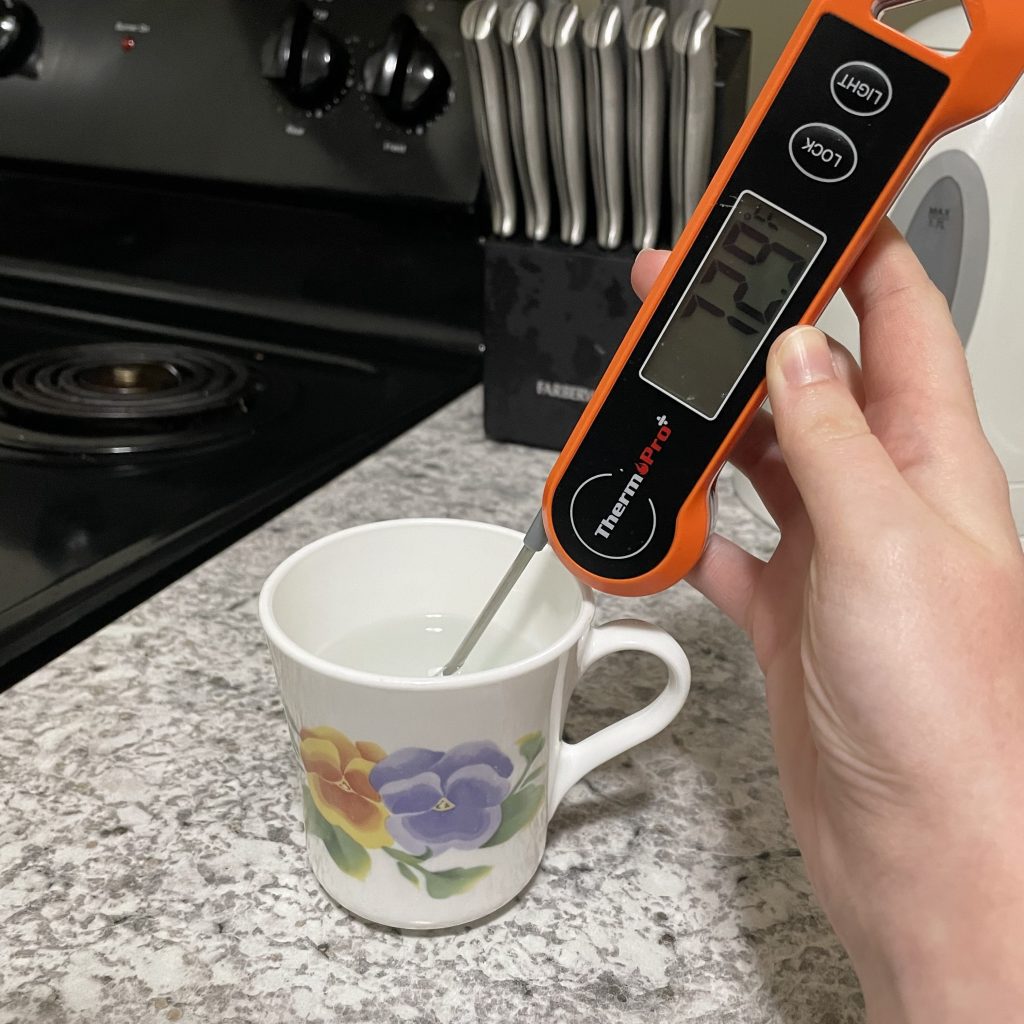
There’s another definition of “lukewarm” that’s similar but not the same. It’s a little more tied to the history and geography of the church of Laodicea, the O.G. “lukewarm church” written about in Revelation. Laodicea was a city with lots of technological advancements, including a plumbing system that used aqueducts to bring water from a faraway water source into the city. The water in this system was often neither hot nor cold, since it came from far away and traveled through the early plumbing. Hot water can be used for cooking, cleaning and therapeutic purposes, and cold water is refreshing to drink. Lukewarm water can’t really do any of those things. Therefore, some Christians deduce from this that a lukewarm Christian or lukewarm church is ultimately a useless one. If an individual or church doesn’t accomplish anything for the kingdom of God, it’s often questioned whether they’re even part of the kingdom in the first place. There’s nothing inherently wrong with this mode of thinking, since the Bible does say “You shall know them by their fruits,” and Jesus also told parables about how displeased He would be if we took His gift of salvation and used it to accomplish literally nothing. But if this mode of thinking starts sowing doubt into Christians’ hearts as to whether they’re “doing enough” for God or not, that’s when problems sneak in. And if they think they’ve fallen short (which we all do), they think, “Oh no, I must be lukewarm!” Plus, if you want to get technical, lukewarm water is actually not useless. Lukewarm water can still quench your thirst; in fact, I know people who’ve told me “lukewarm” means “useless” and yet they prefer drinking lukewarm water over cold. Lukewarm water is also ideal for swimming, which I love.
Another definition of “lukewarm” I’ve heard is very different from the others above. It comes from a website called Scrupulosity Solutions by Jaimie Eckert (a site I frequent often), specifically in an article of hers about spiritual burnout, apathy and numbness. Since Christians evidently assume being “lukewarm” basically means being spiritually complacent, Jaimie offers an alternative view of what spiritual complacency really means in order to comfort believers struggling with feelings of apathy. She cites Zephaniah 1:12-13, which describes God declaring punishment upon people who believe in Him, yet believe that He “will not do good, nor will He do evil.” She’s right; there’s no point in believing in God at all if you don’t believe what He says, and He says He will punish sin, reward righteousness, and forgive all repentance. In a sense, every stereotypical “lukewarm person” has this type of complacency in their hearts, because deep down, they do believe that God will do nothing about the sin that still runs their lives. However, that definition comes from the Old Testament. I believe it’s possible to look to the end of the New Testament, where it talks about lukewarmness, and find a helpful guide to understand it.
There’s still another definition of “lukewarm” I’ve heard before, and I’m inclined to believe this may be the most biblical, most reasonable definition. It comes from my favorite podcast, The Healing and Freedom Journey by Mark DeJesus. In one of Mark’s live episodes, he says, “I want to make the case that the lukewarm church is actually the church that doesn’t think they have any issues.” For starters, I think this is the most accurate because Mark attributes lukewarmness to an entire church rather than to an individual. Lukewarmness is always individualized in modern times even though it was originally used to describe a whole body of believers. As Mark reads through Revelation 3, he highlights the self-righteousness of the Laodicean church that causes Jesus to call them “lukewarm,” revealing that lukewarmness is a state of heart and mind, not necessarily something you do or don’t do enough of. Biblical lukewarmness speaks much more to a lack of humility and daily reliance on God’s grace for your right-standing with Him. You can click here to hear Mark’s entire discussion.
I spoke with my husband on this topic and he brought up an interesting point–perhaps Jesus didn’t give us a clear-cut definition of “lukewarmness” because we didn’t need one from Him. As long as you obey Jesus, it’s pretty easy to avoid being lukewarm. What’s rather difficult and disorienting is avoiding lukewarmness by following other people’s vague, incomplete definitions. But I hope I’ve been able to help you learn more about what lukewarmness really is. As someone who has repeatedly stressed myself out by accusing myself of being lukewarm according to incomplete definitions, I’ve put together a reasonable guide inspired by Revelation 3 to help people not falsely accuse themselves of lukewarmness anymore.
Sign 1: You Actually Care About This Topic
The first sign that you’re not a lukewarm Christian is that you’re even concerned about it to begin with. Now obviously, the idea of being “spat out of Jesus’s mouth” is scary to pretty much everyone in the world. But as of late, many Christians get so worried about the idea of being lukewarm that they frequently examine themselves and they research signs of lukewarmness. I was one of them; I would do this and voice my worry to people like parents and Christian friends, and their answer was always the same: “If you were lukewarm, I don’t think you would care.” If you found this post through a Google search, you are one of them too. The Laodiceans needed Jesus Himself to send them a jarring message to actually get them to care. People who are deeply lukewarm indeed do not care, especially to the point of obsessive worrying, researching, crying or fasting about it. It was incredibly freeing for me when I finally accepted this.
Now I will say, every believer will likely have times in their life when they’re a little bit lukewarm. This isn’t good per se, but it is common, and it is forgivable by God’s grace. Jesus commands the lukewarm church to repent of their lukewarmness, which shows that they are not too far gone, so even if you are lukewarm, do not despair. If you care deeply about not being a lukewarm Christian, this shows that you’re aware that there’s more to being a Christian than just calling yourself one. This is a big step in the right direction.
Sign 2: You Know Your Need for God’s Grace
The second sign that you are not actually lukewarm is that you are poor in spirit. I know “poor in spirit” is very much a “Christianese” phrase, so allow me to explain just in case. In Matthew 5, Jesus begins His sermon on the mountain with “Blessed are the poor in spirit, for theirs is the kingdom of heaven.” Being poor in spirit or, in other words, spiritually poor, is another way of saying that you have nothing to offer spiritually. Poor people depend on others to meet their needs for them, whether it be money, food, clothes, or medicine. Being spiritually poor is the same in that you are dependent on somebody else to give you righteousness.
The bad thing about the lukewarm people in Laodicea is that they clearly were not poor in spirit–they didn’t think they needed any help from God. Verse 17 shows this, as they say “‘I am rich, I have prospered, and I need nothing.’” Jesus disagrees, calling them figuratively “wretched, pitiable, poor, blind and naked.”
You see, the Laodiceans struggled with an issue that’s actually prevalent today. To put it in modern terms, the Laodiceans seem to have thought they were “good people.” Many people think, “Oh, I’m a good person. I believe in Jesus, and I don’t really need any grace or forgiveness.” Anyone can think like this; many nonbelievers think this way (which is why they’re not Christian), and many Christians subconsciously think this way too, acting like accepting Jesus one time makes them a “good person” who no longer needs Him and avoids sin–this is the lukewarm believer. This trips up so many people, because even though they think they’re good people, what they don’t know is that “good people” can’t make it to heaven. To get to heaven, you have to be either a perfect person, or a forgiven sinner. Since no one is perfect except for Jesus, we all need to be forgiven sinners in order to inherit eternal life.
Sign 3: People Aren’t Utterly Shocked That You’re Christian
Sign number three that you are not a lukewarm Christian is that the people around you can tell that you’re following Jesus, by word and deed!
Commonly, when you look up “signs you’re a lukewarm Christian,” one of the signs listed is that you’re embarrassed to tell people about Jesus or your faith in Him. Sharing Jesus does not come easily to everyone; in fact, in person, it does not come easily to me. I will not go out of my way to hide my faith from others, but I’m not great at being the first person to bring it up either. But I’m learning that it’s okay if you don’t compulsively interrupt silence with preaching, and you wait for times to share when it makes sense. If Jesus infiltrates every aspect of your life, then it doesn’t matter what you talk about with people; an opportunity to talk about God will show up eventually. Sharing your faith isn’t (always) a debate you need to win. It just means refusing to censor your faith when talking with others.
Plus, an easy but significant way to set yourself apart as a Christian is simply to act like Jesus. It means watching how you dress and talk; it means refusing to join when friends are gossiping about a person. It means being repeatedly kind and forgiving to a coworker who just doesn’t like having you around. People outside the faith will notice you’re different by your fruit. The fruit the Holy Spirit grows in your life to draw others in are love, joy, peace, patience, kindness, goodness, faithfulness, gentleness, and self-control.
A passerby who notices you crossing the street is obviously not going to know that you’re a Christian, unless you’ve got a big honking sign and a megaphone. And if you don’t have those, that’s alright. People who are actually part of your life are the ones meant to notice you’re set apart. If you’re NO different from the nonbelievers in your life, then yeah, you claiming the title “Christian” will probably be a bit of a surprise, and that’s not a good sign. But that will not be you if you actually allow Jesus to dictate the way you conduct yourself in public. As Jesus says in John 13:35, “‘By this everyone will know that you are my disciples, if you love one another.’” So if you don’t go around school interviewing everyone’s beliefs Ray Comfort-style, chillax–that doesn’t have to mean you’re lukewarm. At best, it just means your time hasn’t come for that yet, or you need some practice, or you were simply designed to share Jesus differently than that.
4: Certain Things Convict You
If your sense of conviction is utterly numbed and nothing ever convicts you, that is a warning sign. But I’m guessing that doesn’t apply to you at all. Everyone has a general inward sense of right and wrong (a conscience), and Christians don’t have just that; they also have the Holy Spirit in them. The Holy Spirit’s job is to guide us through life and keep us in step with God. A truly lukewarm person will go through life giving absolutely no thought to what the Holy Spirit wants them to do and what pleases Him, only doing whatever it is they want. But if you can point to areas in your life where you can see Him guiding and setting boundaries on the way you live and behave, that’s strong evidence of relying on God and not being lukewarm. Examples could be what words you say, what music you listen to, or how much money you let yourself spend on personal possessions.
I have a close Christian bestie and I’ve always found it so interesting to find differing convictions between the two of us. She felt convicted to not watch Wicked; I felt convicted to not watch the finale of Stranger Things. Saying certain words every now and then convicts me, but not her. Halloween costumes convict her, but not me. A lot of Taylor Swift songs convict me, but not her–except for one particular song, which convicts her and not me! I don’t know how we got such different convictions, but the point is that every follower of God will have the Holy Spirit to convict them in certain areas.
Only be wary of taking “conviction” to mean “anything I don’t like,” or vice versa. Just because something makes you uncomfortable doesn’t mean the Holy Spirit is trying to keep you from it. The bottom line is that if you go through life doing WHATEVER you want without giving heed to right or wrong, there’s probably a conviction issue. Christians are aware that, while liking things isn’t bad, they aren’t simply allowed to do whatever they want. Conviction is the Holy Spirit’s way of reminding us of that, and if you’ve ever experienced that, then you’re very unlikely to be a lukewarm Christian!
5: You Tend to Be Very Hard on Yourself in Your Faith
Being a lukewarm Christian is a big problem, but being too hard on yourself is the inverse of that problem, and many Christians are too hard on themselves. If you’re hard on yourself, you probably won’t be able to tell on your own, so it’s important to rely on other trusted believers in your life to help you. If these trusted believers tell you things like, “Maybe you’re overthinking,” or “I really don’t think you’re lukewarm,” or outright “You’re being too hard on yourself,” it’s important to listen.
Truly lukewarm people have the exact opposite problem–they’re not hard enough on themselves, because of the previous sign of having no conviction. Jesus says the lukewarm are wretched, miserable, poor, blind and naked. They stay lukewarm because they aren’t firm enough with themselves to even notice that about themselves, and even if someone points it out to them, they may deny it! So if you are super strict with your faith to the point of anxiety, you very likely aren’t this type of person.
6: You Embrace All of God’s Word, Even the Countercultural Parts
This is the section that may step on some people’s toes; I hope you’re prepared for that. That stereotypical “lukewarm person” described earlier? That is a person with sin in their life, specifically unrepentant sin. EVERY believer is going to still sin, so what’s the difference? What makes unrepentant sin tied to lukewarmness?
It comes down to the heart posture that Revelation 3 talks about: “I am in need of nothing. I don’t need grace in this area, because I’m not sinning.” The Bible flies in so many people’s faces so to speak–truly lukewarm people are often the most bothered by that.
Is getting drunk with your friends every now and then just “fun,” or is it “debauchery” as the Bible calls it? Is consulting a fortune-teller just “fun,” or is it what the Bible calls “divination?” Is sleeping with your boyfriend or girlfriend “gaining experience,” or is it what the Bible calls “fornication”? Is terminating an unborn baby “healthcare,” or is it infanticide? Is agreeing with same-sex couples “inclusive,” or is it agreeing with what the Bible calls “sexual sin”? Is using the name of Jesus Christ as an expletive just talking, or is it a sin against the third commandment God gave Israel? There’s a good chance you’re reading all that with your mind completely made up already, and that’s fine, as long as you’ve truly consulted and aligned with the Bible and not your own culture or opinion. Aligning your worldview with Scripture is the surefire way to avoid lukewarm Christianity, because it is the surefire way to rid your heart of unrepentant sin.
So, did you pass the six above signs of not being a lukewarm Christian? If so, take a breath and fear no more. Or did you actually fail one or two or ALL of the six signs? You know what–still take a breath. Jesus sent His Revelation 3 message to the church of Laodicea, but He sent it there knowing you would eventually read it. Take in His words:
I counsel you to buy from me gold refined by fire, so that you may be rich, and white garments so that you may clothe yourself and the shame of your nakedness may not be seen, and salve to anoint your eyes, so that you may see. Those whom I love, I reprove and discipline, so be zealous and repent. Behold, I stand at the door and knock. If anyone hears my voice and opens the door, I will come in to him and eat with him, and he with me. (Revelation 3:18-20)
This message isn’t a death sentence; it’s a wake-up call. And it’s not a call to any vague TikTok criteria, to be super hard on yourself, to street preach, or to never enjoy again. It’s simply a call to follow everything that Jesus has already taught us. So enjoy going about your life not worrying about the whole “lukewarm” thing anymore!

 Calla Rae